
Articles
Sustainable foodservice in 2026: the operator's playbook
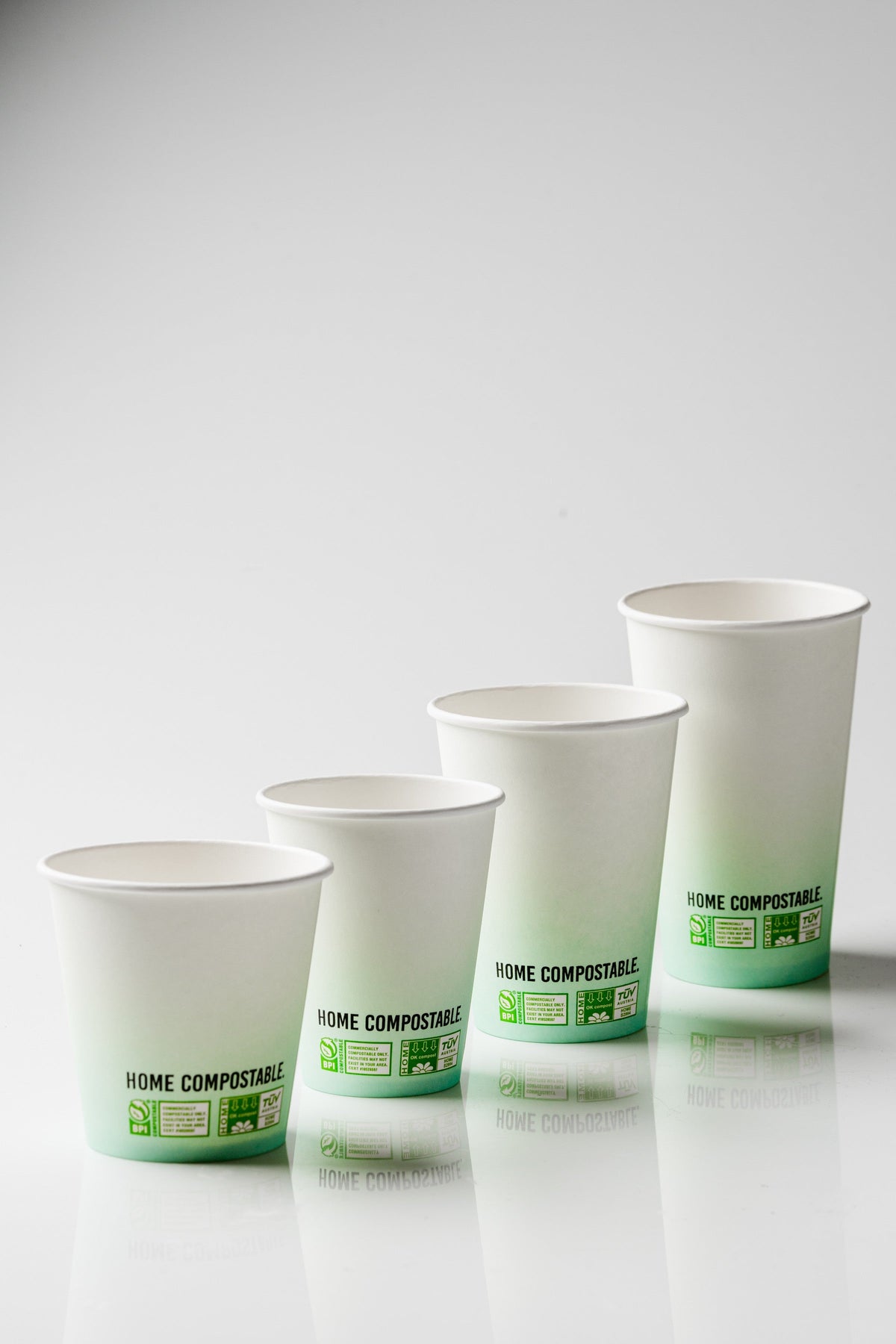
For years, sustainable packaging was something foodservice brands announced and then quietly put off. That got harder in 2026. State packaging laws are collecting fees, California's compostable labeling rules have a firm date, and guests still notice what their food arrives in. This playbook covers what is driving the change and a practical plan for operators, procurement teams and the people who sign off on packaging claims.
Three things moved at once. Producer fees went live in more states. California tightened what can be called compostable. And the most common compostable plastic, PLA, came under more scrutiny for how it behaves after use. None of these is new on its own. Together they mean packaging is now a cost, compliance and brand decision, not only an operations one.
Force 1: guests still care, and they can tell
Interest in sustainable packaging has held steady rather than spiking and fading. In McKinsey's 2025 global packaging survey, 51% of consumers rated environmental impact as extremely or very important when judging packaging, about the same share as in 2020 and 2023.
For takeout and delivery, the container and the fork are often the only part of your brand that reaches the guest's home. A claim that does not match what happens to the item after use is the kind of thing guests and regulators both notice.
Force 2: EPR turns packaging into a line item
Extended Producer Responsibility (EPR) laws shift the cost of collecting and recycling packaging from cities to producers. Seven states have them: Maine, Oregon, Colorado, California, Minnesota, Maryland and Washington, according to the Sustainable Packaging Coalition's policy tracker. Its October 2026 update listed no new state packaging EPR laws enacted this year, despite bills in several legislatures.
- Oregon's program launched on July 1, 2025, with Circular Action Alliance as the producer responsibility organization.
- Colorado producers began paying dues in January 2026, with Circular Action Alliance as the designated organization.
- California's SB 54 regulations took effect on May 1, 2026, and Circular Action Alliance submitted its program plan to CalRecycle on October 13, 2026.
Most programs put the obligation on the brand owner of the packaging, so many operators feel EPR mainly through supplier pricing. If your brand is printed on cups or bags, or you import packaging directly, check whether you count as the producer. Our EPR compliance guide and California SB 54 guide go deeper.
Force 3: California is narrowing what counts as compostable
California's compostable labeling law (Public Resources Code section 42357, from AB 1201) already requires certification to the right ASTM standard, OK compost HOME certification for anything labeled home compostable, and a cap of 100 parts per million total organic fluorine to keep PFAS out.
The next requirement is the big one. From June 30, 2027, a product labeled compostable in California must also be an allowable organic input under the USDA National Organic Program. In January 2026 the National Organic Standards Board voted unanimously against adding synthetic compostable materials to that list, while saying it could still review individual substances. Two 2026 bills that would have reshaped the rules did not advance, and a further extension request was pending with CalRecycle as of August 2026.
As written, this affects compostable bioplastics broadly, including PHA. It also matters beyond labels: under SB 54, covered packaging must be recyclable in the state or eligible to be labeled compostable by 2032.
Force 4: PLA is under the microscope
PLA is the most widely sold compostable plastic, and it was designed for industrial composting. It only breaks down meaningfully above roughly 58°C (about 136°F), which backyard piles rarely sustain. In a peer-reviewed seawater study, PLA textile samples showed no sign of degradation after 428 days. Composting facilities also vary in what they accept, and look-alike plastics are a constant contamination worry for them.
For operators, the risk is a "compostable" claim on an item that has nowhere to compost. We cover this in detail in why PLA isn't actually compostable.
Comparing your material options
| Material | Where it is designed to break down | Watch for |
|---|---|---|
| Conventional plastic | Not designed to biodegrade | EPR fees, local bans, guest perception |
| PLA | Industrial composting at high heat | Few facilities accept it; not a home compost material |
| Fiber and molded pulp | Composting, depending on coatings | Coatings and grease barriers; California's organic fluorine limit |
| Wood | Composting, depending on treatment | Texture and mouthfeel for cutlery |
| PHA | Home and industrial compost; as a material it also biodegrades in soil, freshwater and marine settings | Check certifications product by product |
For more on PHA, read what is PHA, or the PHA vs. PLA comparison.
The operator's playbook: six steps for 2026
- List what you use: every packaging and utensil SKU, its material, its supplier and the claim printed on it.
- Match each claim to real disposal. If your guests and locations have no commercial composting pickup, an industrial-only compostable claim is weak. Home compostable certification closes that gap.
- Check state rules where you operate. California's 2027 date matters for anything labeled compostable there, and EPR states may affect your pricing or reporting.
- Cut the supplier count. Fewer suppliers means fewer certificates to track and one conversation when rules change.
- Keep the paperwork. Hold current certificates by product, and ask suppliers for written positions on California and EPR.
- Train the front line. Staff and signage should tell guests exactly where an item goes after use.
What to ask any packaging supplier
Certifications and claims
- Is the product certified for home composting (OK compost HOME), or industrial only?
- Can you provide current certificates for every SKU I buy?
- What is your plan for California's June 30, 2027 requirement?
Supply and range
- Do you make your own material and finished products, or buy and contract them out?
- Can you cover cutlery, straws, stirrers, cups and lids from one source?
- What are your lead times and minimum orders at my volume?
Support
- Will you document every environmental claim we make on our menus, bags and website?
- Do you offer samples for in-service testing before we commit?
How PlantSwitch fits, and where to start
PlantSwitch is a material science company. We make CompostZero™, our own PHA material, made through fermentation from renewable feedstocks, and we develop and manufacture the finished products ourselves. Our cutlery, cutlery kits, straws and stirrers are certified home compostable, with certifications from TÜV Austria (OK compost HOME), BPI and DIN CERTCO across the line, and FDA compliant for food contact. Hot cups and lids are available by quote. CompostZero™ stands for No Forever Microplastics.
Want to test it in service? Request samples or a quote, browse the full shop, or email sales@plantswitch.com. If you buy through a distributor, our distributor page explains how to order through yours.
Make the switch


